
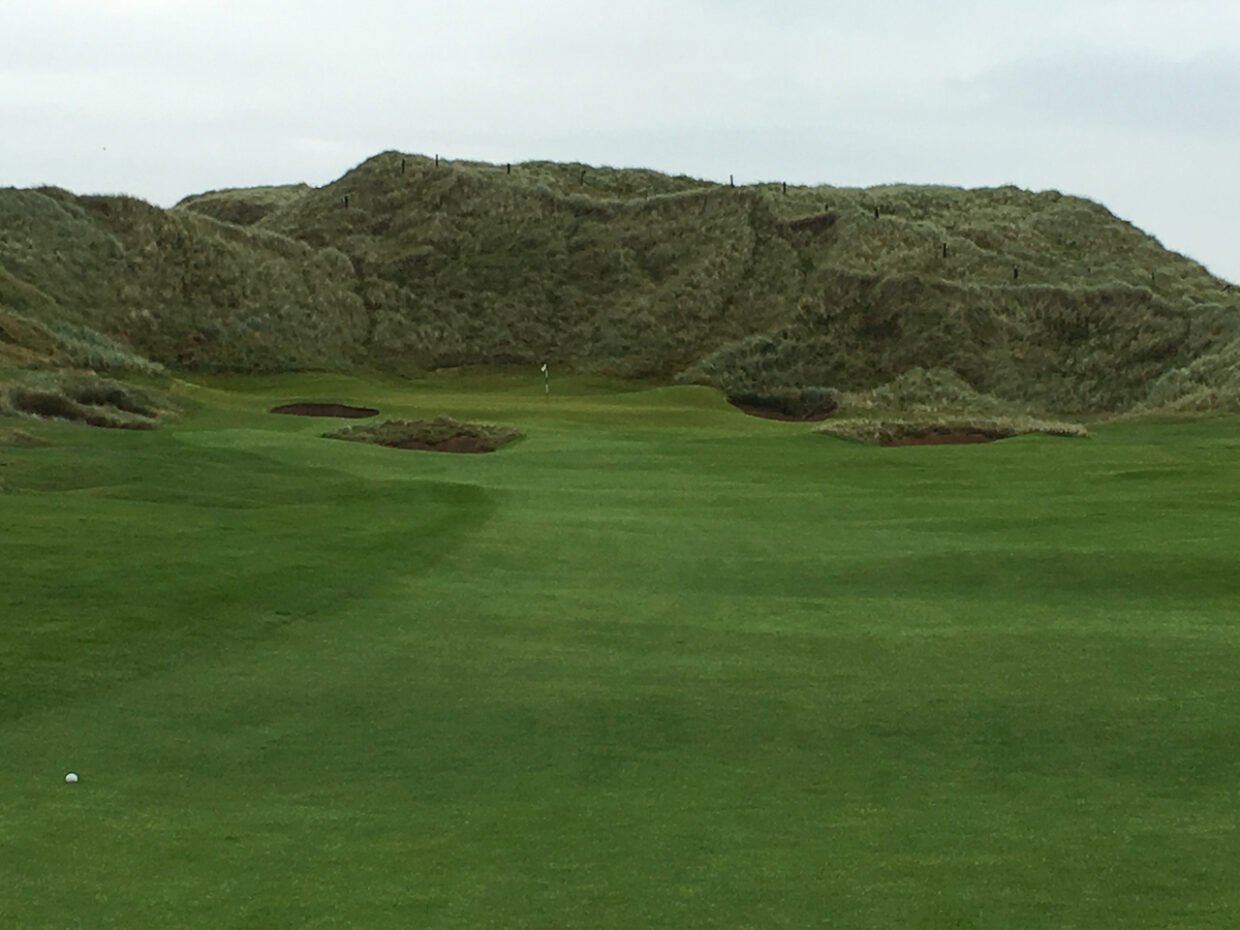
A golf course feels much less confusing once you know what the different areas are called. You do not need to study every detail before playing; this is simply a quick map of a typical hole from the first shot to the last putt.
The teeing area
Every hole begins at the teeing area. The coloured markers show different distances. As a beginner, choose the tees that make the hole feel manageable, not the ones that look the most impressive. A shorter hole gives you more chances to learn and enjoy the round.
The fairway
The fairway is the shorter-cut grass between the tee and the green. It is usually the easiest place to hit from, so it is a sensible target. You do not have to hit every fairway to have a good round, though. The goal is simply to keep the next shot as simple as possible.
The rough
The rough is the longer grass at the sides of the fairway. The ball can sit down in it, which makes clean contact harder. If your ball is in the rough, take a shorter, more reliable swing and aim for an easy next position rather than trying a miracle shot.
Bunkers and penalty areas
Bunkers are the sand areas around fairways and greens. They are part of the challenge, but they do not need to spoil a beginner round. Get the ball back into play, rake the sand afterward, and move on.
Ponds, streams, and marked areas on a course are usually called penalty areas. If a ball goes in, do not guess at the rule. Look for the coloured stakes or ask a playing partner which relief option the course uses. The simple priority is to keep the group moving safely.
The green, hole, and flagstick
The green is the closely cut area around the hole. It is where you putt. The flagstick marks the hole, and you may leave it in or take it out when putting. Greens can slope more than they first appear, so take a moment to look at the line and then make a calm, simple stroke.
A few course words you will hear
- Dogleg: a hole that bends left or right.
- Par: the number of strokes a skilled golfer is expected to take on a hole.
- Out of bounds: an area outside the course boundary, usually marked by white stakes.
- Cart path: the paved or gravel route used by buggies or carts.
Once you know these basics, the course stops looking like a maze. For a simple guide to what actually happens on the day, read what to expect during your first nine holes. And if you are unsure how to behave around other golfers, start with golf etiquette for beginners.
